One topic, many formats: a data-science content set
How I planned a content set on metrics in data science – from choosing the topic and interviewing our data science team to an article, an ebook, downloadable resources and a social series, with AI used for drafting and the experts supplying the substance.
Context
The article was part of a wider campaign aimed at data scientists and ML engineers. Content for this audience has to be technically right, which means it needs input from busy in-house experts – so gathering that input once and using it across several formats saves a lot of their time.
Approach
Gather expert input once, then turn it into a range of formats – from educational content to cheat sheets and social media posts. The audience stayed the same: potential users at different stages of their careers, so the article covered the basics and the ebook went deeper, for advanced data scientists.
Interviews and a survey of the data science team
The basics, for readers early in their careers
Depth for advanced data scientists
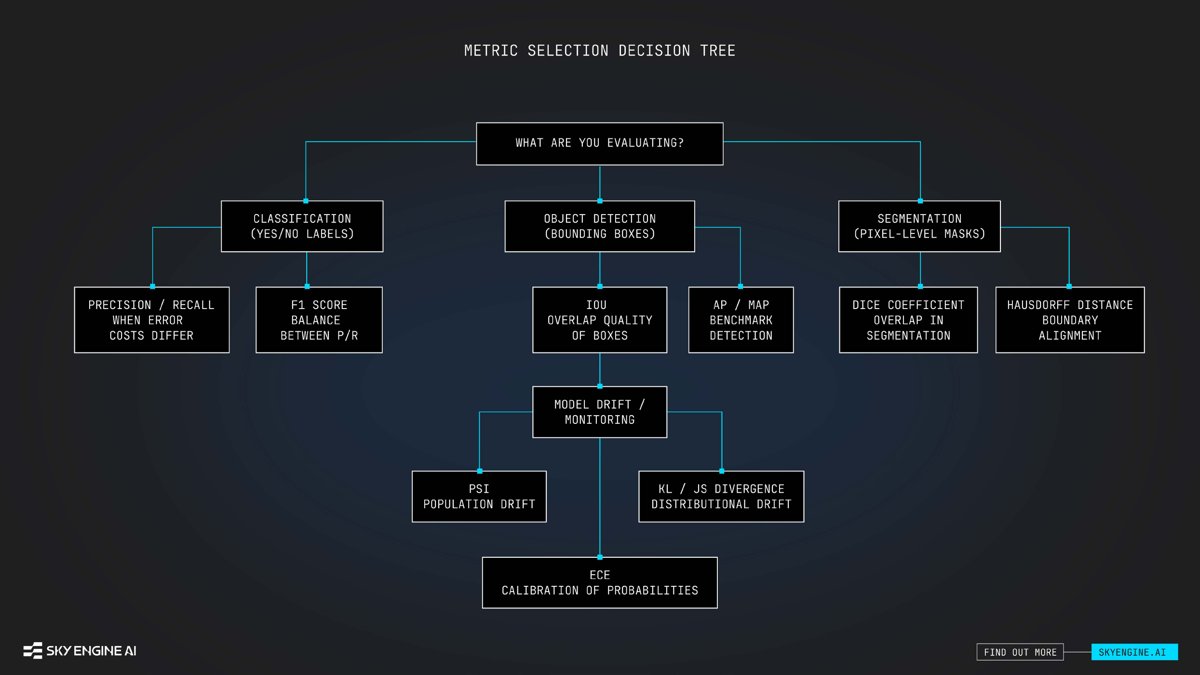
Which metric to use, at a glance
Formulas and best use cases on one page
Short posts that lead back to the article
What I did
- Came up with the subject and title of the article, as part of the campaign.
- Planned a pair of materials from the start: an article covering the basics and an ebook for advanced data scientists.
- Interviewed our data science team and surveyed them on what they would want to read in such publications – especially at the beginning of their careers.
- Only then turned to ChatGPT, with one extensive prompt built on that input, to draft the ebook.
- Designed the illustrations and used ChatGPT to simulate relevant data for the charts, so they looked realistic. Our graphic designer re-skinned them at the end.
- Wrote the article.
- Came up with downloadable cheat sheets and a decision tree to accompany the topic, and wrote a series of social media posts on it.
How I check AI-drafted content. I always review the text myself first, then send it for final review to the subject-matter expert who consulted me at the start – in this case, our data scientist. Only after the expert’s green light did I release the article for publishing.
The work
Result
One topic and one round of expert input fed a whole range of formats, from educational content to cheat sheets and social media posts. The article went live, and readers downloaded the cheat sheets. The ebook was prepared but, in the end, not published.
What I’d do differently
I’d publish the ebook earlier.